
Visoki Dečani
A Divine Miracle beneath the Prokletije
The Marble Beauty
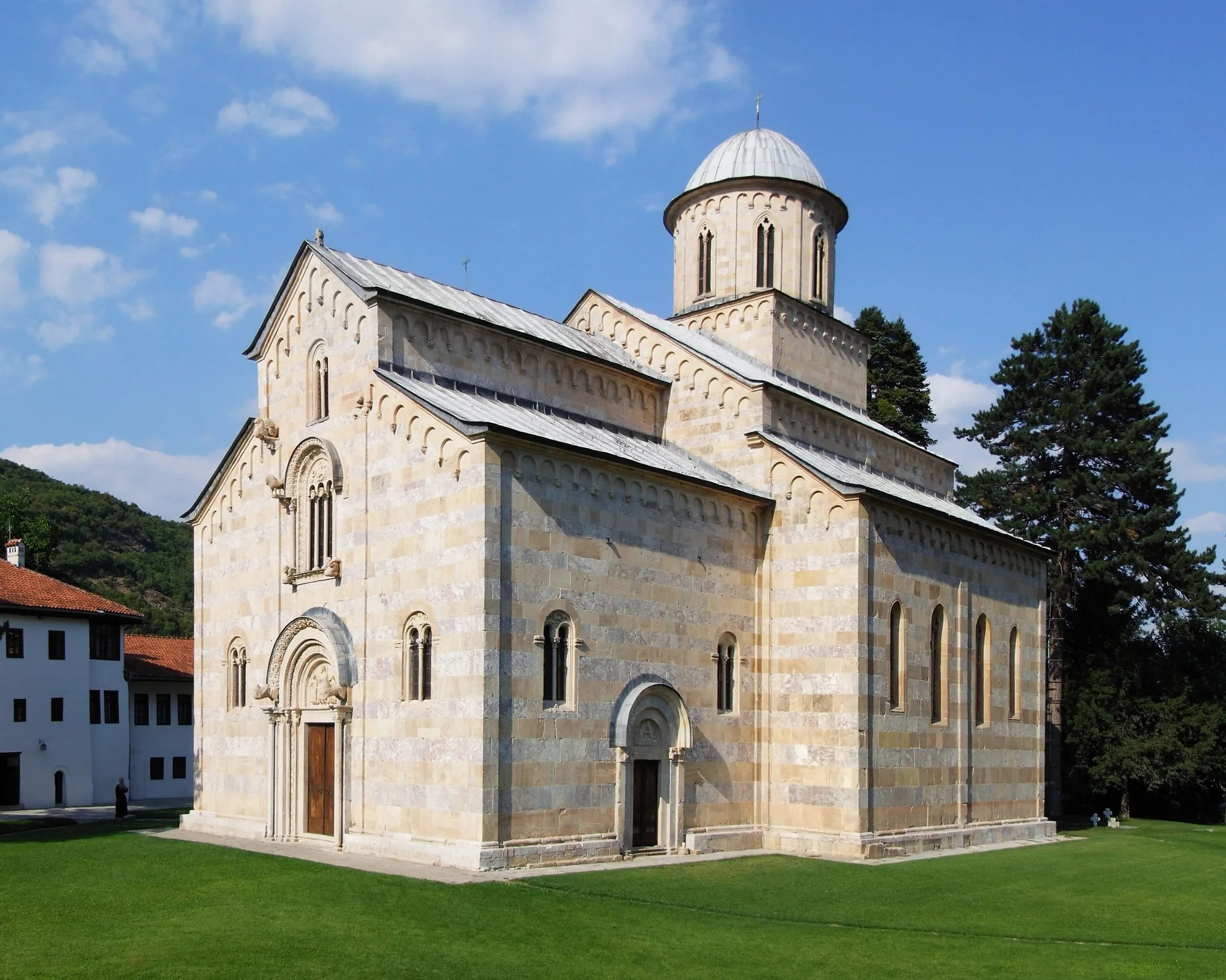
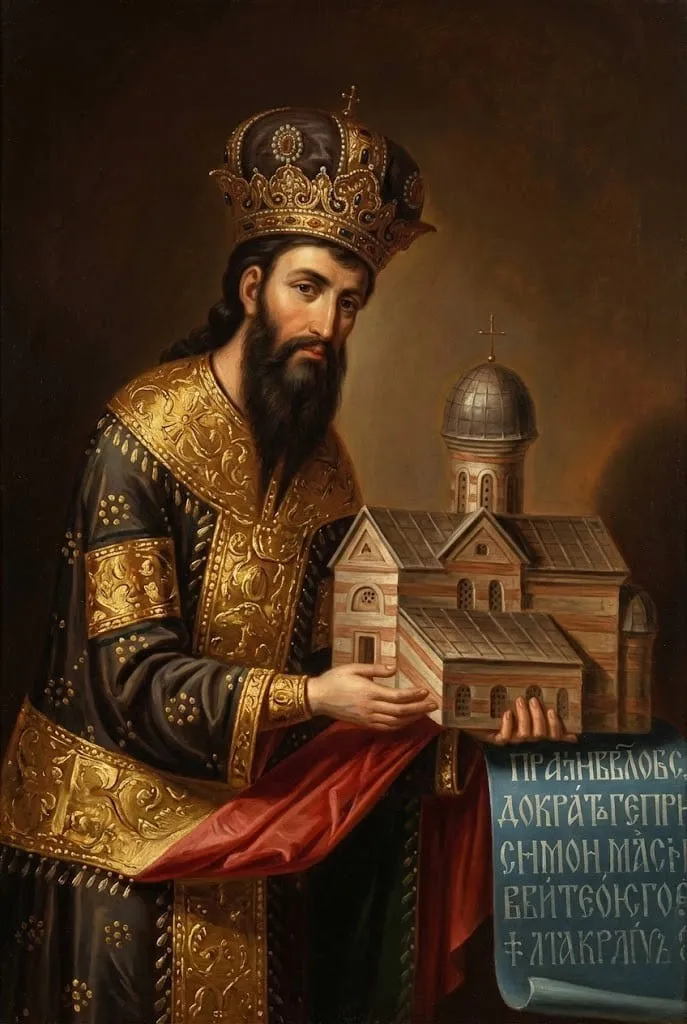
Visoki Dečani Monastery is the endowment of King Stefan Dečanski and his son, Emperor Dušan. It was built between 1327 and 1335 in a fertile valley beside the Bistrica river, at the foot of the rugged Prokletije mountains. Because of its imposing height (over 29 metres) and its white marble, the people called it “Visoki” (High).
The chief builder was Fra Vita of Kotor, a Franciscan, which explains the unique architecture of the church. Dečani represents a perfect symbiosis of a Byzantine dome and interior space with Romanesque treatment of the façade and Gothic elements, making it an architectural wonder of its time.
The Holy King and 1,000 Frescoes
Dečani is the largest preserved gallery of medieval painting, with over 1,000 compositions and several thousand figures. But the greatest treasure of the monastery is the incorrupt relics of the Holy King Stefan Dečanski, which have rested in front of the altar for centuries. It is believed that he himself guards his endowment, which is the only Serbian church in Kosovo and Metohija that has never been demolished or burnt since its construction.
Key Facts
- Dedicated to: Christ Pantocrator
- Completed: 1335
- Builder: Fra Vita (Kotor)
- Location: Dečani, Kosovo and Metohija
- Status: UNESCO (In Danger)
At a glance
Related
Literature and sources
This list is for further reading and verification. Online sources were checked on 30 September 2026; books and medieval sources are recommended reading, not sources for individual statements on this page.
Online sources
Further reading
- Sima Ćirković, Srbi među evropskim narodima. Beograd: Equilibrium, 2004.
- Sima Ćirković, Rade Mihaljčić (ur.), Leksikon srpskog srednjeg veka. Beograd: Knowledge, 1999.
Medieval sources
- Grigorije Camblak, Život Stefana Dečanskog.