
Spasić Pavilion
A witness to the rise and suffering of Belgrade
The first at the Fairground
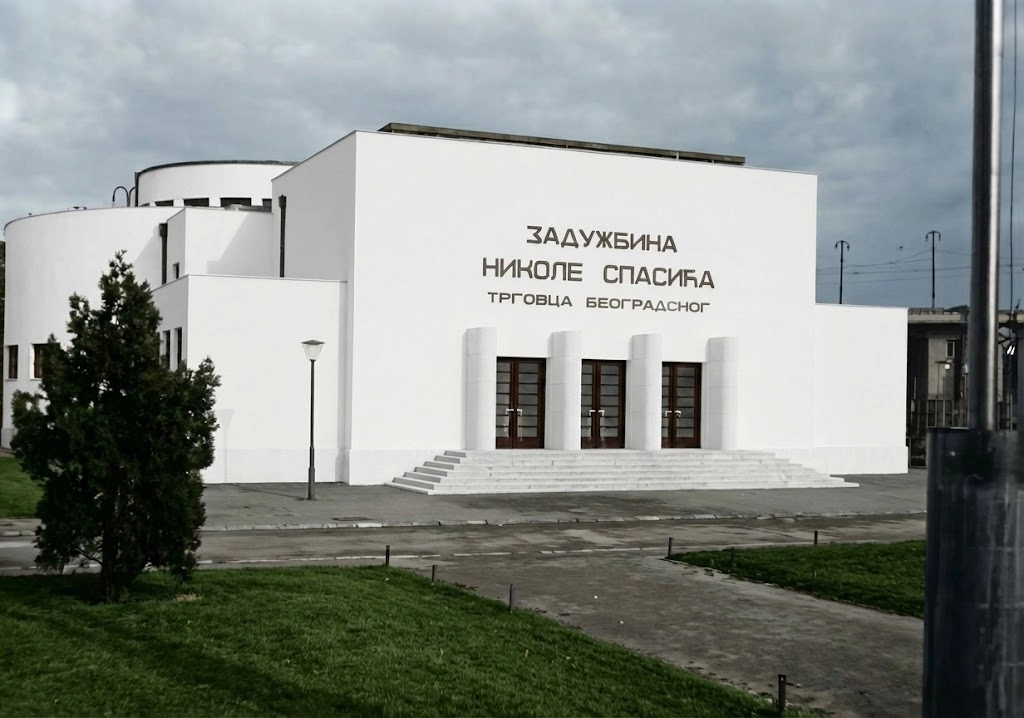
When, in the late 1930s, Belgrade began building its first fairground complex on the left bank of the Sava, the Nikola Spasić Endowment was among the first to respond to the call to build. Thus in 1937 the first building of the new fairground arose – the Spasić Pavilion.
Designed in the spirit of the modern architecture of the time, circular in form with a dominant dome, the pavilion was a symbol of the Endowment's economic strength and of its contribution to the development of trade and the economy of the Kingdom of Yugoslavia.
From fairground to camp and art
The history of this building is turbulent and tragic. During the Second World War, the Fairground was turned into a Nazi camp (Judenlager Semlin), and the pavilions became places of suffering for thousands of Jews, Roma and Serbs. During that dark period the Spasić Pavilion served as the camp hospital.
Key Facts
- Built: 1937
- Architect: Aleksandar Sekulić
- Location: Old Fairground
- Purpose: Exhibition pavilion
- Status: Cultural monument
At a glance
Related
Literature and sources
This list is for further reading and verification. Online sources were checked on 30 September 2026; books and medieval sources are recommended reading, not sources for individual statements on this page.